

Happy Halloween, fellow nerds. This year I’m not feeling especially afraid, since the consumer electronics market has already made me shake in my boots for all of 2026. But I’ve got a spine-tingling tale that’ll chill you, at least if you’ve ever had a large chunk of money at the mercy of an unfeeling and uncaring corporation.
Welcome to the Boost Mode newsletter. Every week I share my insights on PC gaming, desktop setups, and hardware optimization. I also track down some of the most interesting PC and nerd news from around the web, plus a PC game pick you might not have seen elsewhere. Want this newsletter to come directly to your inbox? Sign up on our website!
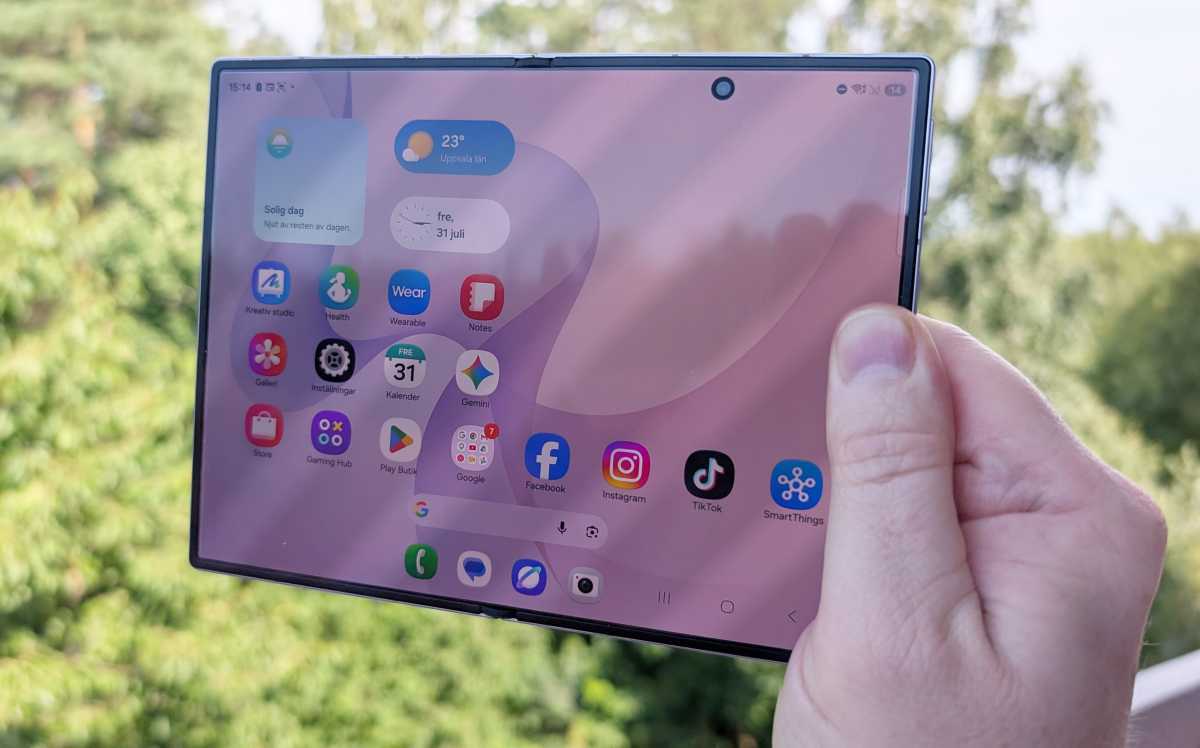
On July 31st, I ordered the Samsung Galaxy Z Fold 8. I’ve used the Z Fold 6 for a couple of years and really enjoyed it, easily the best and most capable smartphone I’ve ever had…though I’ll also admit that it’s a wicked extravagance. But I managed to get a generous discount with a trade-in, bringing the price of the Fold 6 down to “just” $1400 back in 2024. And I’d do it again, or at least, I would have back in July. So I investigated how much I could save on the fancy new model, with its much thinner build and more appealing 4:3 aspect ratio.
A lot, as it happened. Samsung was offering a staggering $1100 for my Fold 6. I checked, and that was approximately double what I could expect to get from selling the phone used. If you’re scratching your head on this one, yeah, it doesn’t make sense in terms of pure numbers. But Samsung and other companies often offer boosted trade-in value on their own hardware in an attempt to secure brand loyalty. (Or at least in order to secure multiple serial purchases, which I guess is the same thing.)

Luke Baker
There’s a cadence to this process, as you weigh the pros and cons between the maximum trade-in value at the time, your budget, and your desire for cool new gadgets. It made sense in this case. So I ordered the Z Fold 8, excited to see the rapid advancement of Samsung’s folding tech, and stoked that I got the new phone for effectively $800 plus tax.
The Z Fold 8 arrived on August 14th. I fell in love. It’s a downgrade for the cameras, since it lacks the third super-zoom on the rear and the interior selfie cam is no longer hidden under the display. But everything else about this phone is brilliant in pretty much every way. You can go read a review if you want more info, my point is I have no problems with the new phone. Even so, I hung on to my old one for a little over a week, just to make sure everything was properly transferred and I didn’t get buyer’s remorse.
Mattias Inghe
But even at that point, I was wary. The “old” phone was 100 percent functional, but it now had a very precise and deliberate value riding on it: $1100. That’s a pretty good chunk of my monthly income. And I’ve had phones disappear from shipping before, and been on the hook for them. So I took precautions. I took photos of the phone, wiped and operating. I took a video of myself packing up the device into the trade-in kit, once again showing that it turned on, that both screens were operating, and I’d shut it down before packing it up. I took more photos at the UPS store. I got the paper trail.
Samsung confirmed that it received the phone on August 31st, about a week after I dropped it off.
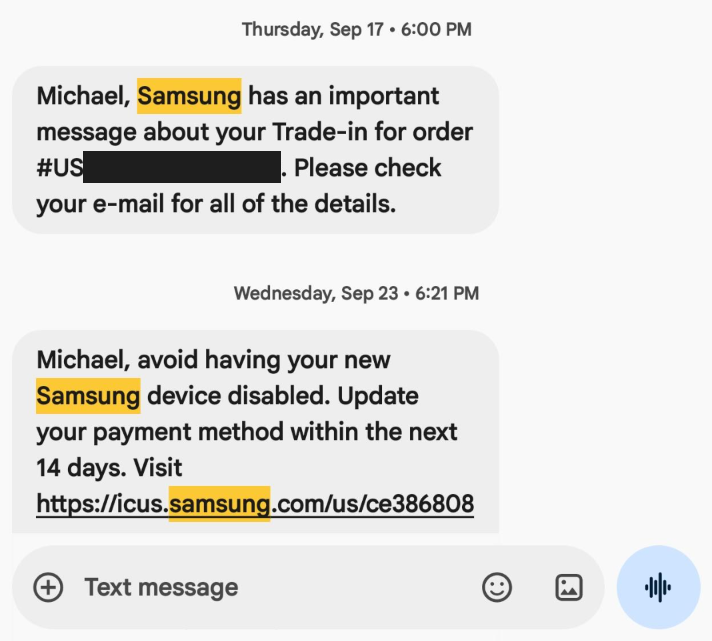
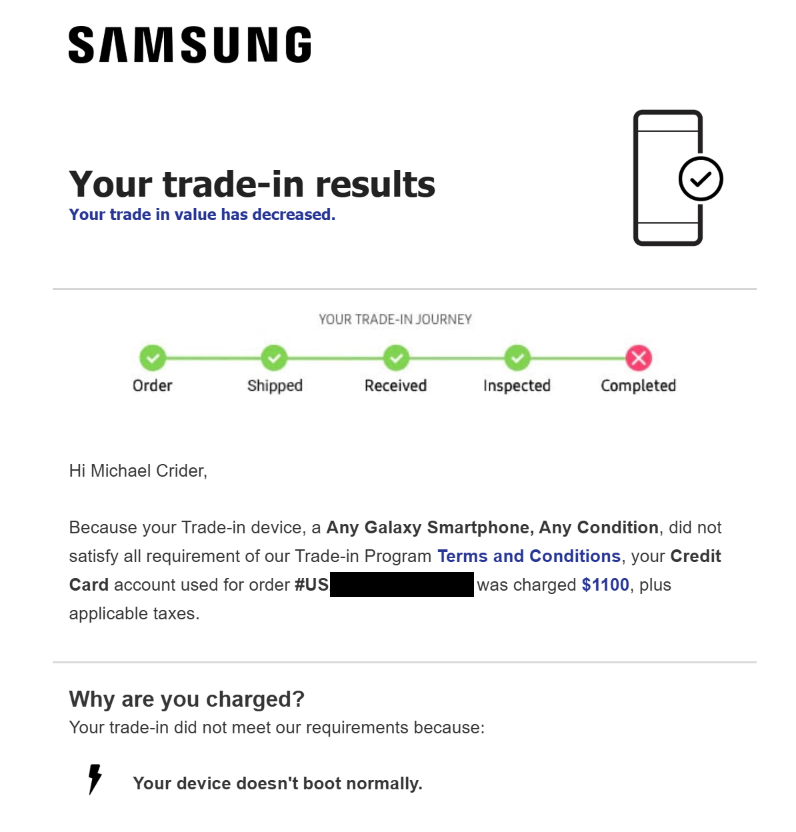
I don’t think you need to be Hitchcock to guess what happens next. On September 17th I got a text about an “important message” from Samsung. The trade-in program rejected the phone and would charge me $1100 for it. The company claimed that it wouldn’t turn on. For evidence it supplied two photos of a phone that, indeed, was turned off. So began my nightmare.
Michael Crider/Foundry
Savvy smartphone users might notice an issue with those dates. By the time Samsung got around to testing my trade-in phone, it had been sitting in a box for more than three weeks. I was fairly sure that the battery had simply run down, and it needed an extended period of charging before it would boot up. I contacted Samsung to tell them this. I told them that I had photos and videos and receipts with proof that the phone had worked when I sent it to them. I offered up this proof. I begged, literally begged, for them to simply place the phone on a charger for an hour and try again.
No dice. Samsung claims that they “reviewed my case,” but I honestly don’t know if anyone ever put another hand on the trade-in phone. They rejected it.
Paraphrasing repeated calls and text conversations with Samsung, I asked what would happen if they sent the phone back to me and my suspicions were confirmed, it was still perfectly functional. Would they start this process all over again, and give me my money back? No, Samsung doesn’t allow do-overs on the trade-in program. Fine, could I just return the new phone I was using, since I’d prefer to just continue using the old one and get that $1100 hole in my budget filled? No, by this time it was late September, and the return window for the Z Fold 8 had passed. I was stuck with it.
Samsung needed my consent to send the trade-in phone back, which I didn’t want to give. But it offered a stick with this particular carrot: If I didn’t agree to receive the original phone, and the subsequent $1100 charge on my card, Samsung would remotely deactivate the Z Fold 8 I was using. Yet another indignity: Samsung was threatening to use its anti-theft system to effectively call me a thief if I didn’t consent to the charge.
Michael Crider/Foundry
I made it clear to Samsung support that if I got the trade-in phone back and it was working, as I told them it was, I’d be raising hell for as long as it took to get the money back. And I consented.
You can probably guess how the rest of this goes. On September 29th I got the phone back. It charged it up. It worked fine. I raised aforesaid hell.
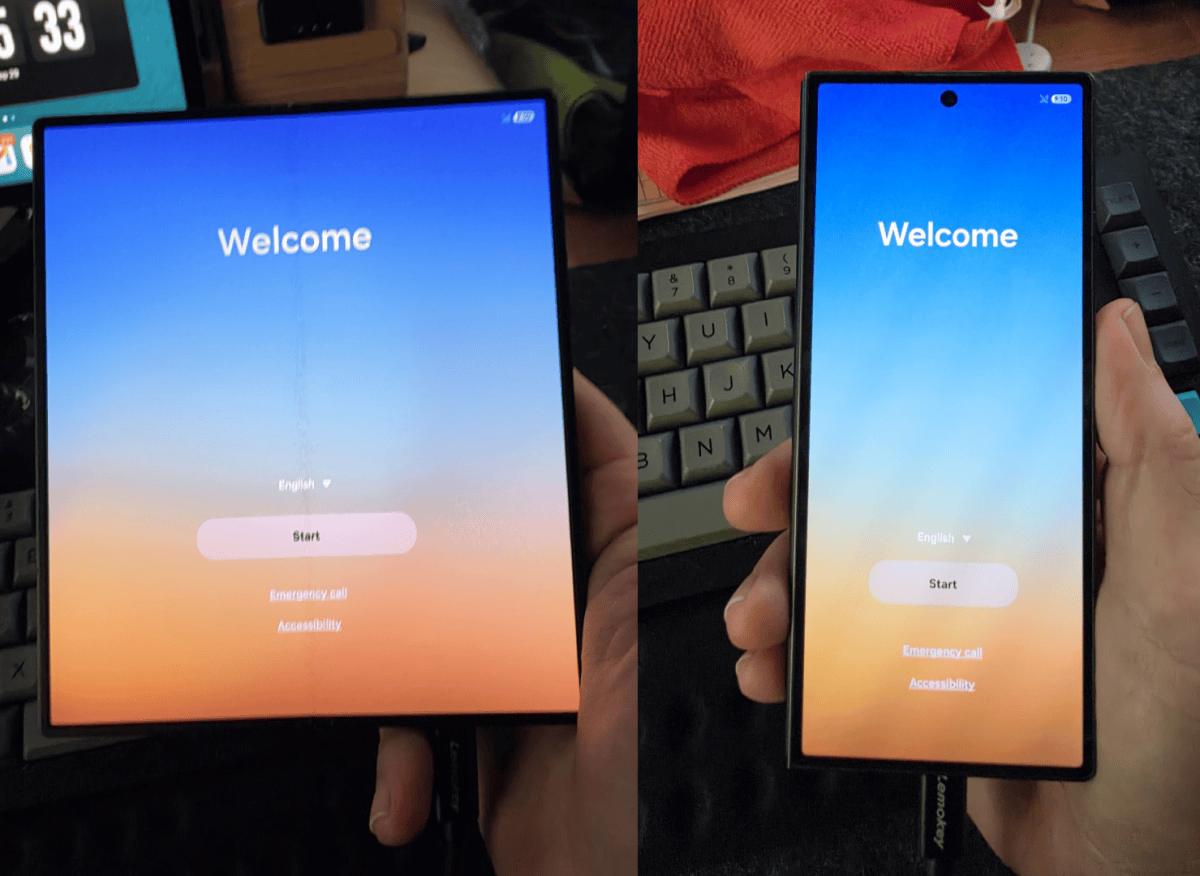
The photos I took on September 29th, about an hour after I got the phone back.
Michael Crider/Foundry
I won’t bore you with every detail of fighting Samsung tooth and nail to get my money back. Skip to the next section if you don’t want the short version, either. Suffice it to say that it was stressful and frustrating, mostly because I knew that if Samsung really didn’t want to take the phone, there was nothing I could do to force them to honor the original agreement. I’d be out the money, and my only options to get it back would be either selling the Z Fold 6 to try and cut my losses, or take Samsung to small claims court. If that’s even possible — corporations in the US, including Samsung, have a nasty habit of forcing you to agree to arbitration that heavily favors them in any dispute.
I was tempted, oh so very tempted, to tell the support staff that I was a technology reporter. To go, in not so many words, “Do you know who I am?” and threaten to write…well, an article more or less like this. Tell Samsung that I had the power to give them a PR black eye if they didn’t give back the money. Or even call up my professional contacts at Samsung. But I resisted. I didn’t want to abuse my position, or gain an advantage that anyone else wouldn’t have access to, in order to get the problem fixed. So I kept my mouth shut.
I estimate that, over the course of the next two weeks, I spent about seven to ten hours of my time with Samsung support. Online text support was a merry-go-round of stalls and delays and frustrations. (As a matter of fact I had to use multiple browsers and clear cookies because they kept shutting down the system to block out my messages.) Phone calls, more of the same. Emails. I sent a dozen photo and videos proving that the phone was working. I threatened small claims court.
I made it clear that I would not stop using their support mechanisms — and costing Samsung money, however little of it was spent on the infrastructure and labor — until I got my money back. I was shuffled up and down various “management” systems. Slowly, ever so slowly, I made progress, and got someone to commit to a refund.
Michael Crider/Foundry
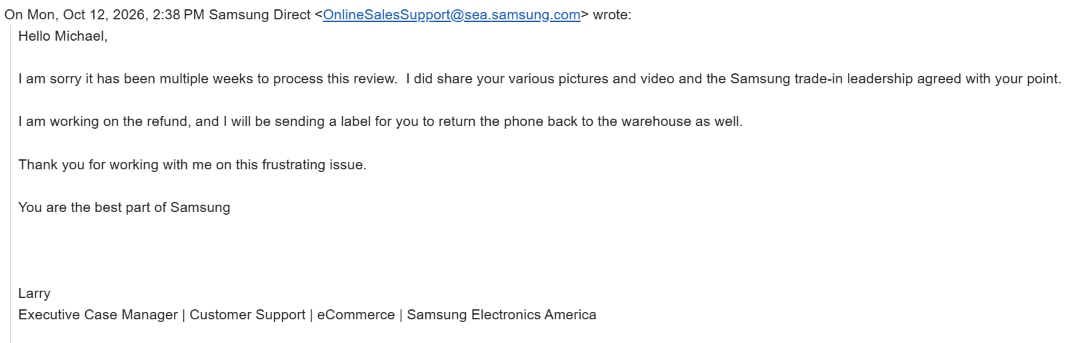
Here’s the email that said Samsung was processing my refund. It also says that they’re going to send me a shipping label for the original trade-in phone. This will be tragically relevant in a moment.
On October 14th, two months after I got the new phone, six weeks after I sent the old phone, almost a full month after being told erroneously that I had sent in a broken phone and would be charged, I saw the refund hit my account. The relief was like a weight being released. $1100 isn’t going to bankrupt me, but it’s still a pretty huge headache that I’d have to deal with, some pretty significant belt-tightening in a monthly budget.
“Okay,” I said to Samsung, again paraphrasing, “I finally got the money back. Now, please send me a shipping label so I can once again send you the trade-in phone.” This would be the final step of the process, and one that the service department “case manager” (I still don’t have their full name) indicated would happen. Almost two weeks later I still didn’t have that return label, or even a clear indication that it would be necessary.
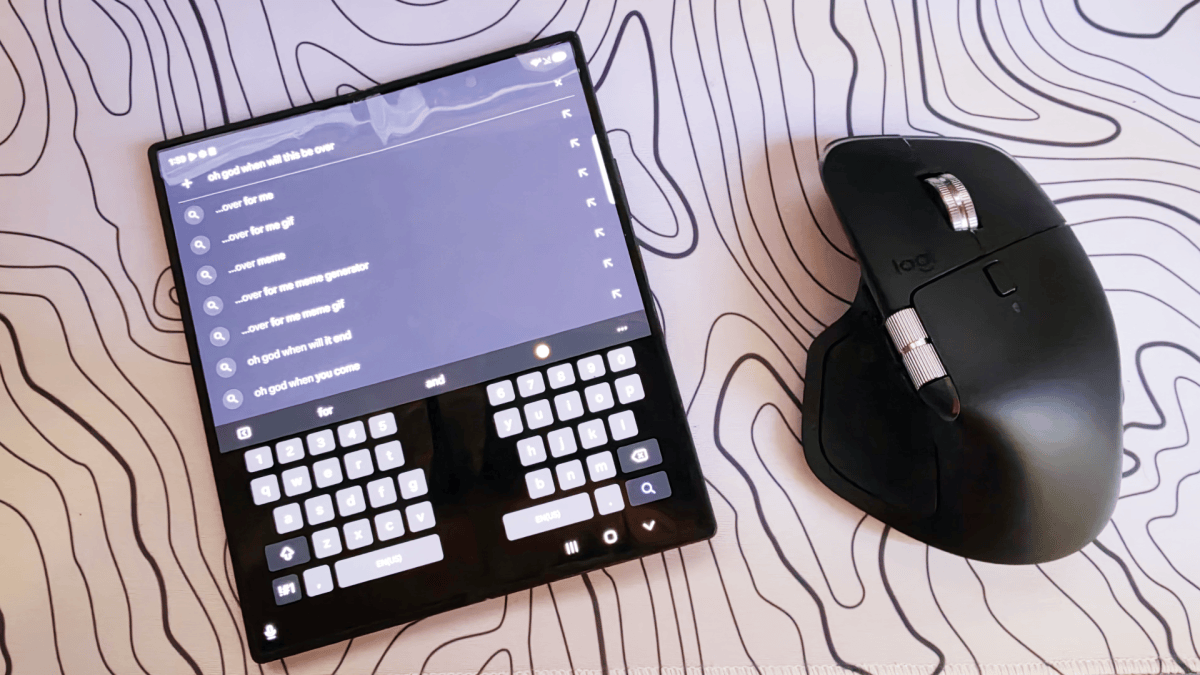
The much-contested phone, right here at my desk, still operational, on October 26th.
Michael Crider/Foundry
So now I have one more little annoyance: A fairly valuable used phone that I can’t sell ($500-600 on eBay), for fear of Samsung asking for it back at some point, and once again holding its $1100 value over my head. It’s a much smaller problem than I had before, but I’m still nervous having the phone on hand. If it just decides to die in the interim, I’ll be out the money, and I’ll look like a massive jackass. The phone is pictured above, today, just for the sake of documentation.
As I was preparing this newsletter, at 12:05 PM US Eastern time on Monday, October 26th, I got a new email from Samsung support after I once again asked them to send me a shipping label. It said that Samsung won’t send a shipping label…and since I’ve said that I have the return device and the refund, I’ll be charged $1100. Again.
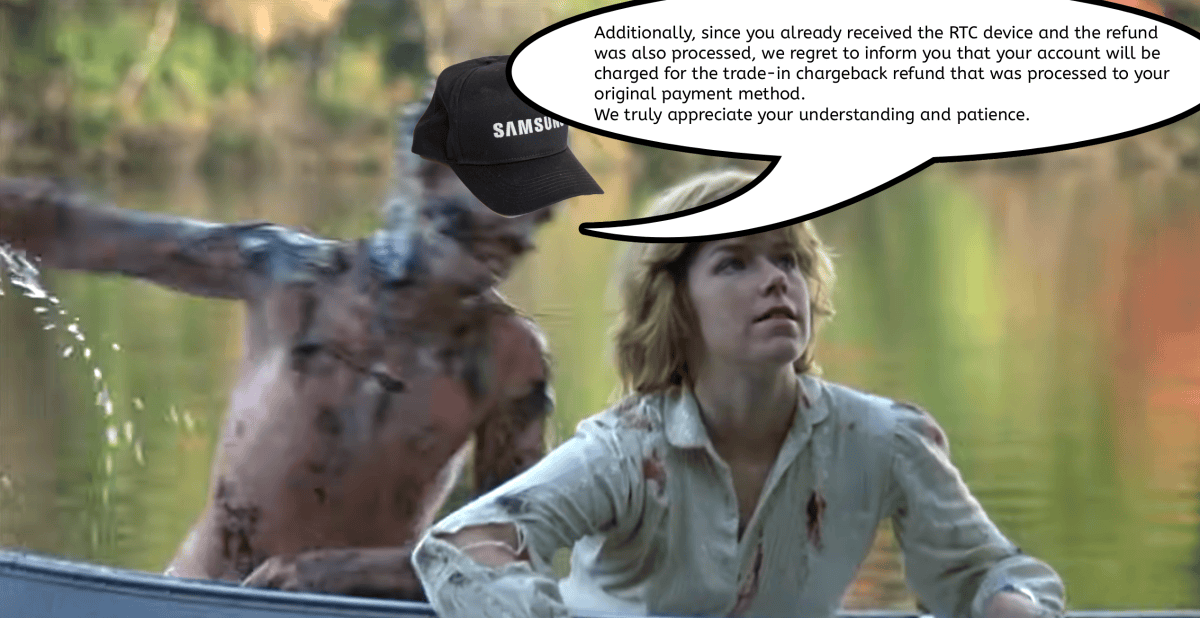
I don’t know if this is another clerical error, perhaps some “AI” bot screw-up, or if this is someone at Samsung sincerely deciding to start this whole process over AGAIN. But I suppose it’s an end note that’s appropriately horrific. Jason Voorhees would be proud.
This rant isn’t just to try and give Samsung the wagging finger of shame for its poor customer service. (Though it is that, yes — the rush for trade-ins for the popular Z Fold 8 seems to have overwhelmed the company’s systems.) Trade-in is becoming more and more common as a means of taking a bit of the sting out of high prices in tons of different markets, especially electronics.
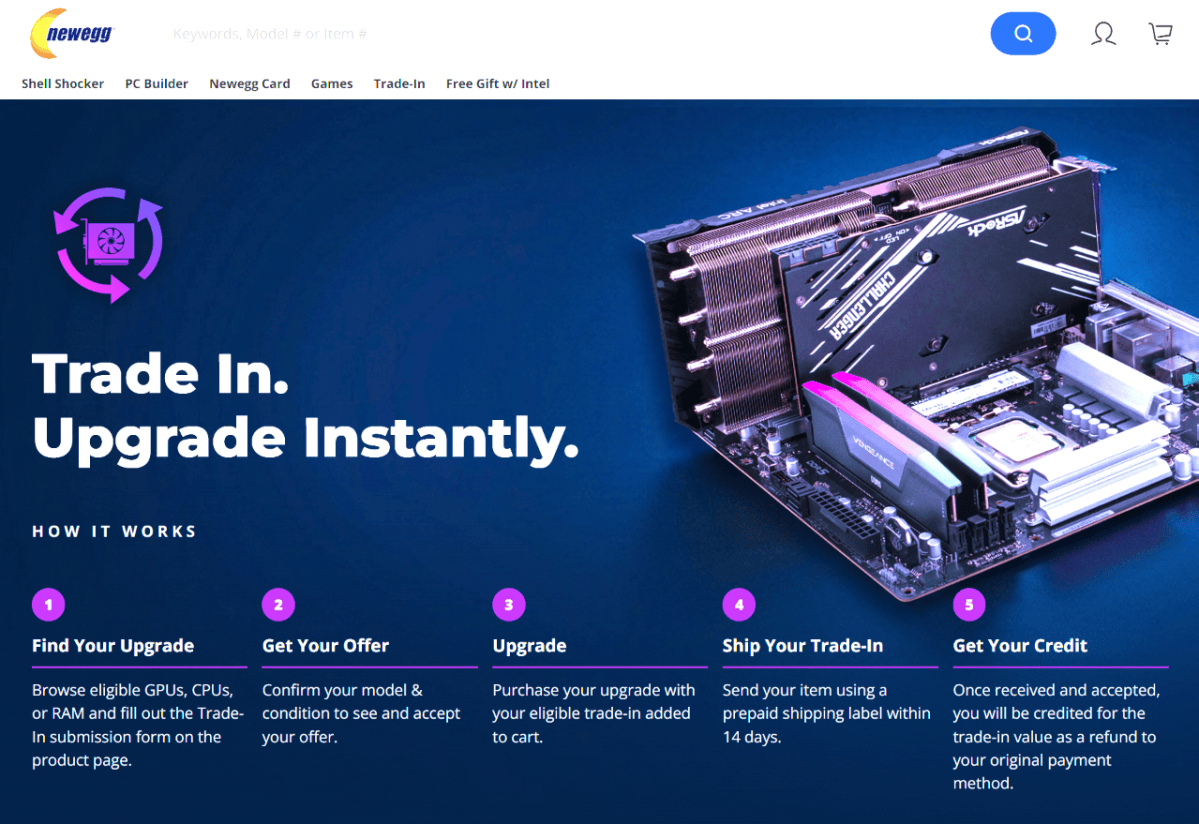
Best Buy will take a trade-in on just about anything these days, though how much they’ll pay is highly variable. Ditto for Amazon, sometimes Walmart, Costco, and Target, depending on the category. Newegg is accepting trade-ins for CPUs, GPUs, and RAM as prices for all of them push into the stratosphere. Getting an easy bit of cash for your old gear is appealing if you’re not using it, though the price is almost always well below market level for the used goods.
But this experience has soured me on it. I’ve traded in phones many times before without problems — again, I only bought the original Z Fold 6 because of Samsung’s generous trade-in promo. Even so, if I had it all to do over again, I would have just sold the dang phone myself and saved a month of stress and aggravation.
Newegg
I’d certainly do that for the RTX 3070 I’ve got in my closet. Newegg will offer me $200, and I could easily get $300 on eBay. Without the wild promotional credit that comes from those phone trade-in deals, it generally makes more sense to sell it on your own anyway. The only thing you’re gaining with trade-ins for most laptops or PC parts is time…and not too much of it, all things considered. That’s assuming that the process goes smoothly. When it doesn’t, it’s a massive headache.
The Z Fold 8 is amazing. It’s easily the best smartphone I’ve ever used. Actually buying it has been the worst experience I’ve ever had with an electronics company. And it’s put me off the entire idea of trade-in hardware.
And on that note, does anyone want to buy a used RTX 3070?
Asus

Castlevania
I spent hours last night swearing at my television. Cursing a blue streak, as I died over and over to a boss. It made me almost as angry as…well, Samsung support. But I kept playing and eventually got through it. Because Castlevania: Belmont’s Curse is that good.
With a mix of old-school Metroidvania map exploration, and speedy, twitchy combat provided by some of the same developers as my beloved Dead Cells, this new entry brings Castlevania an update that it’s been needing for a while. It helps that the game is absolutely gorgeous in every way — no trendy pixel art here, just incredible 3D art and sound over brilliant 2D gameplay.
You might not enjoy it if you prefer combat over punishing platform challenges. (That’s what got me turnt last night — eat my shorts, Dracula’s big thwomp-crushers.) But I can’t deny that it’s an amazing experience regardless. Belmont’s Curse is $30 on Steam.
That’s all for this week. To get my editorials, news picks, and game recommendations delivered straight to your inbox, you can sign up for Boost Mode on the PCWorld Newsletter hub. Also check out The Full Nerd for more enthusiast-focused goodies, Prompt Mode for AI tips, Safe Mode to keep your PC and gadgets secure, and Smart Mode to boost your productivity.


